

The Story
There is a poetry collection called Hitori de Kono Yo ni — “Alone in This World.”
I only realized it was Shuntaro Tanikawa when I opened it for the first time. The text inside was set in Seikōsha typeface.
Tanikawa’s poetry and Seikōsha typeface — an unbeatable combination. This collection could not have existed in any other typeface.
Tanikawa + Seikōsha = happiness.
Lately, something like a “Seikōsha sensor” seems to have activated in me. I’m not searching for books printed in this typeface — they simply find their way into my hands.
It’s not just typefaces, though. Have you ever noticed certain things gathering around you, as if drawn by some invisible force?
But I’ve gotten ahead of myself with the typeface talk.
What really stopped me was the opening of a poem called “Gogo Niji no” — “Two in the Afternoon.”
The two o’clock sun / is nothing but bright.
These two lines. I can’t get enough of them. The moment I read them, I could feel the color, the temperature, the smell. I thought — if there were anything in the world named “The Two O’Clock Sun,” I’d want to keep it close.
And of course, the title poem, Hitori de Kono Yo ni, is breathtaking. Quietly, it stops your breath.
Tanikawa once said that he doesn’t write because he has something to say.
He simply finds words that already exist in the air of this world, picks them up, and writes them down. He was visualizing the invisible — though the process and the reason were, he said, entirely unknown even to himself.
When someone with that gift left this world, it made sense that it became news.
Perhaps those words — the two o’clock sun is nothing but bright — were something waiting inside Tanikawa all along, and one day they simply surfaced as language.
I wonder how I might access the words still living, unseen, inside me. Honestly, I’m looking forward to finding out.
Visual Story Details
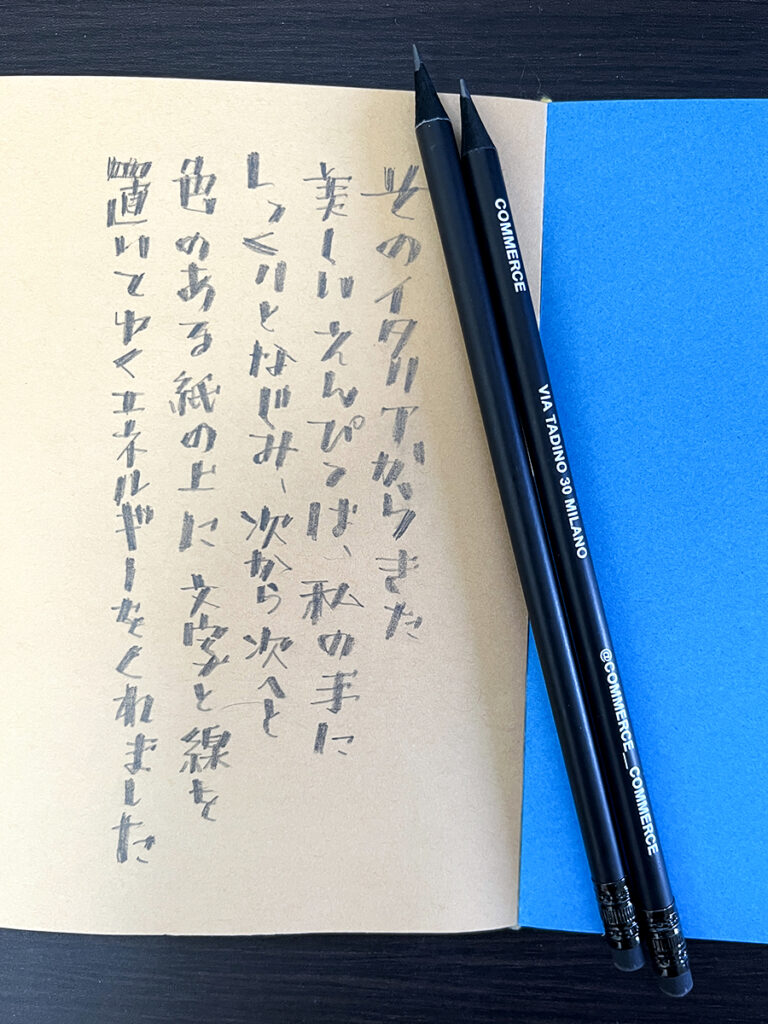
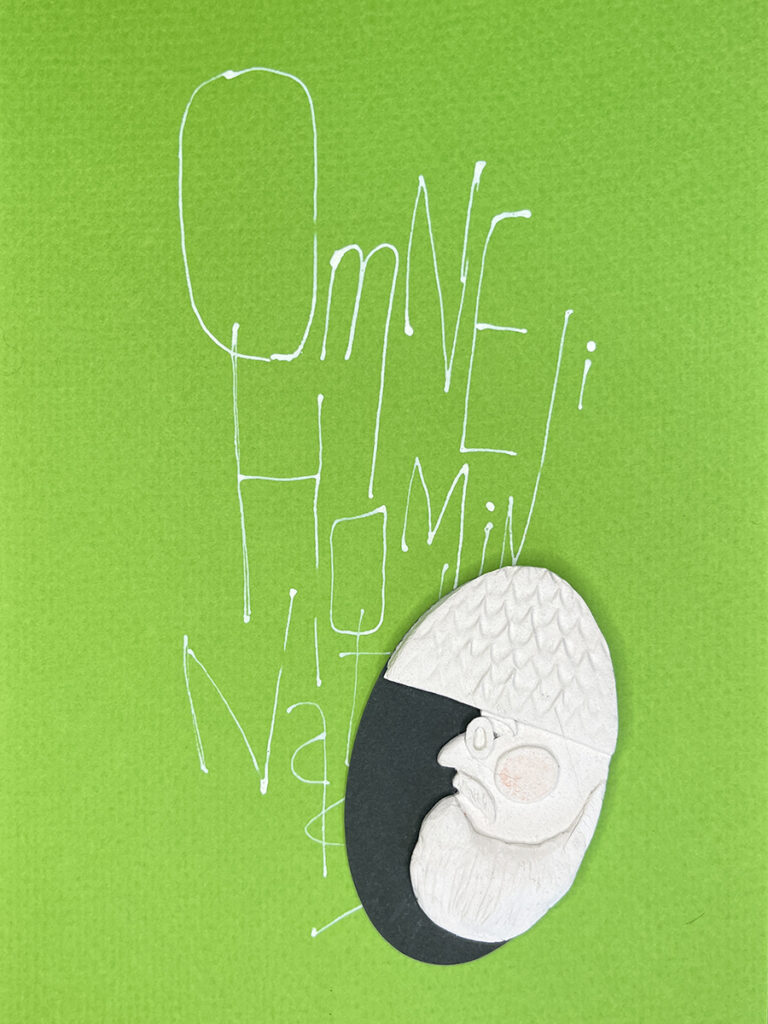
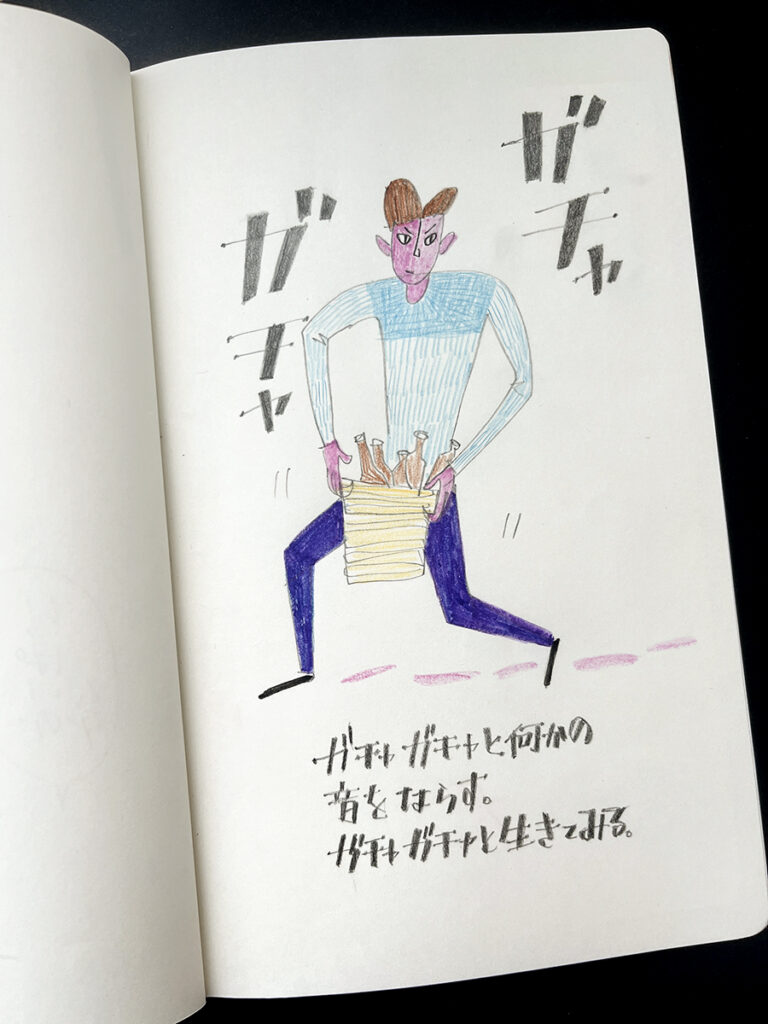
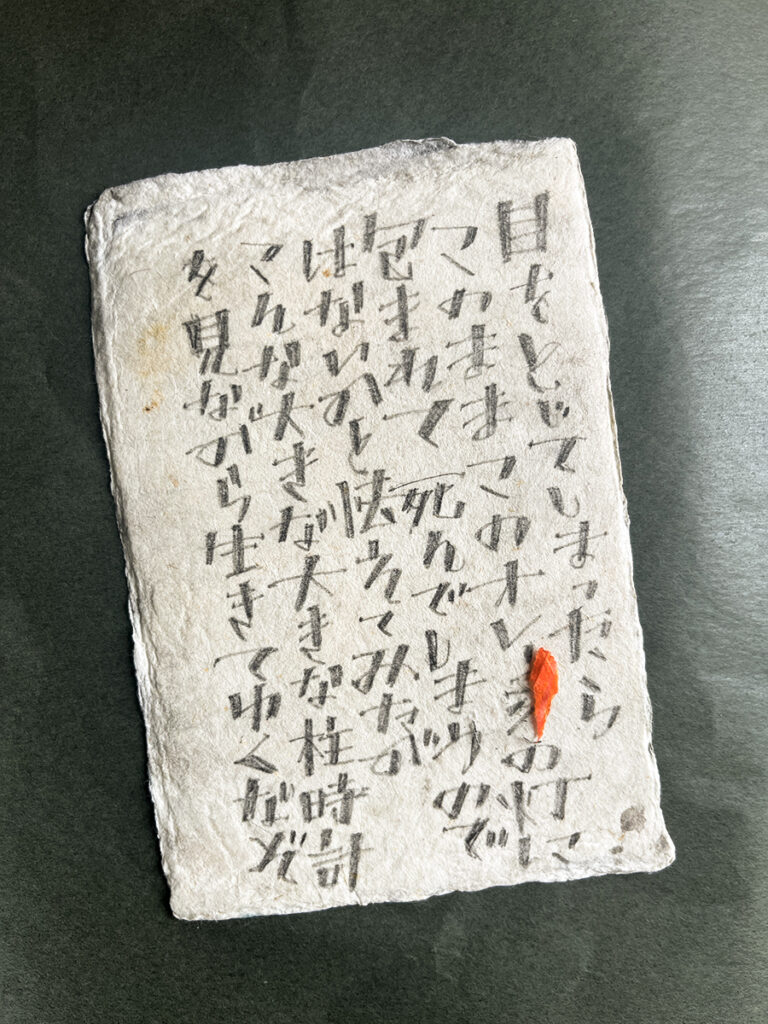
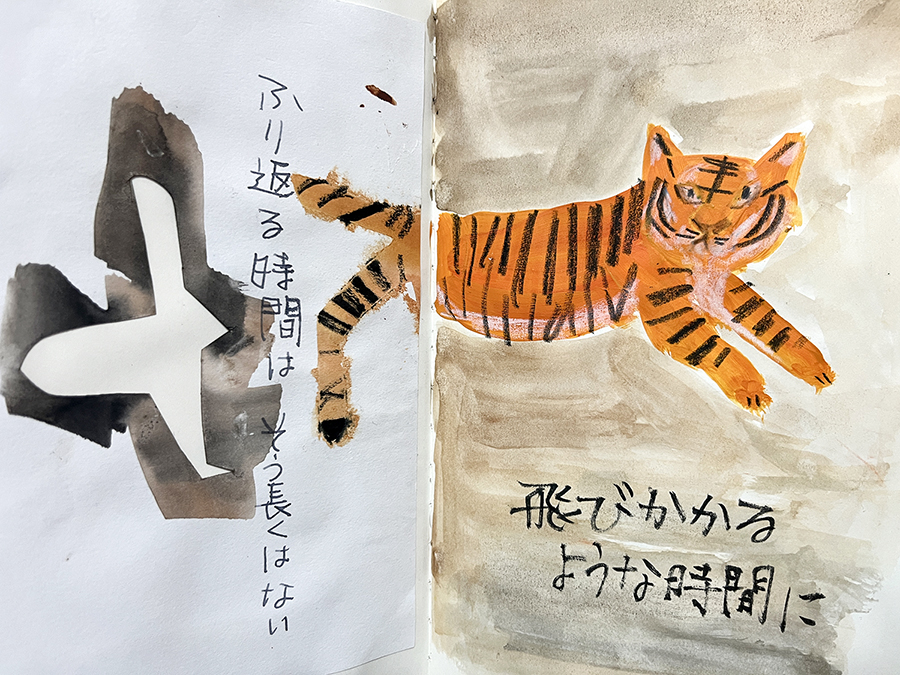
Subject: A painted orange tiger leaping and a bird silhouette, paired with expressive Japanese handwritten calligraphy exploring the passage of time.
Mood: Dynamic yet contemplative, poetic, and deeply connected to the sensory experience of language.
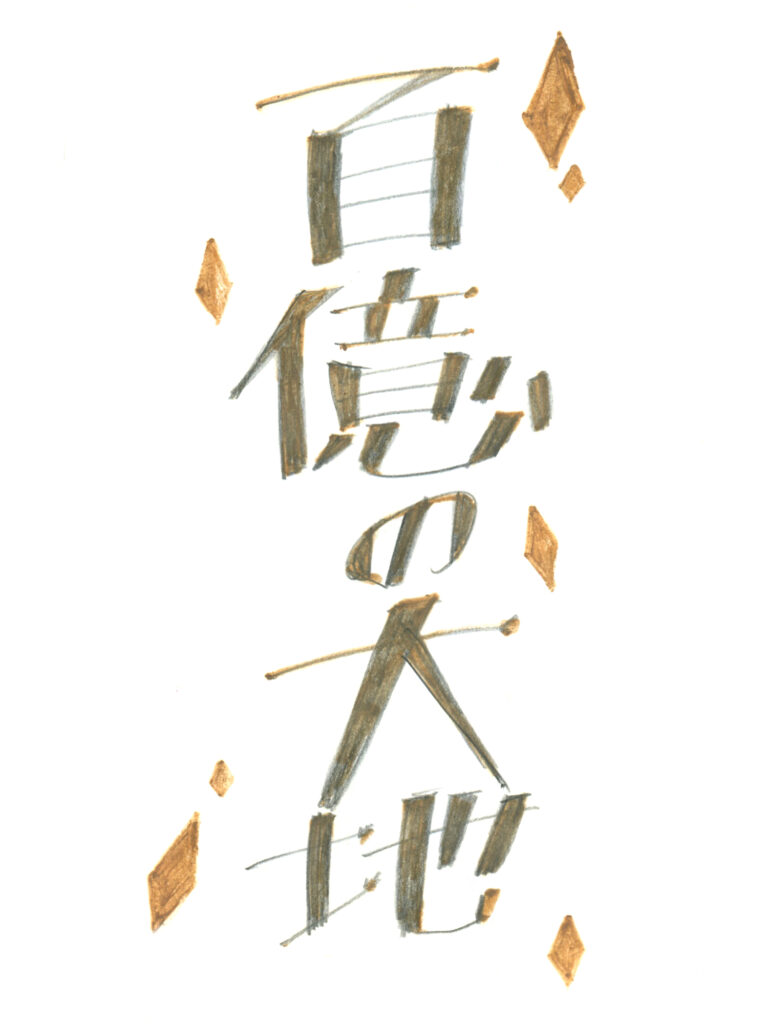
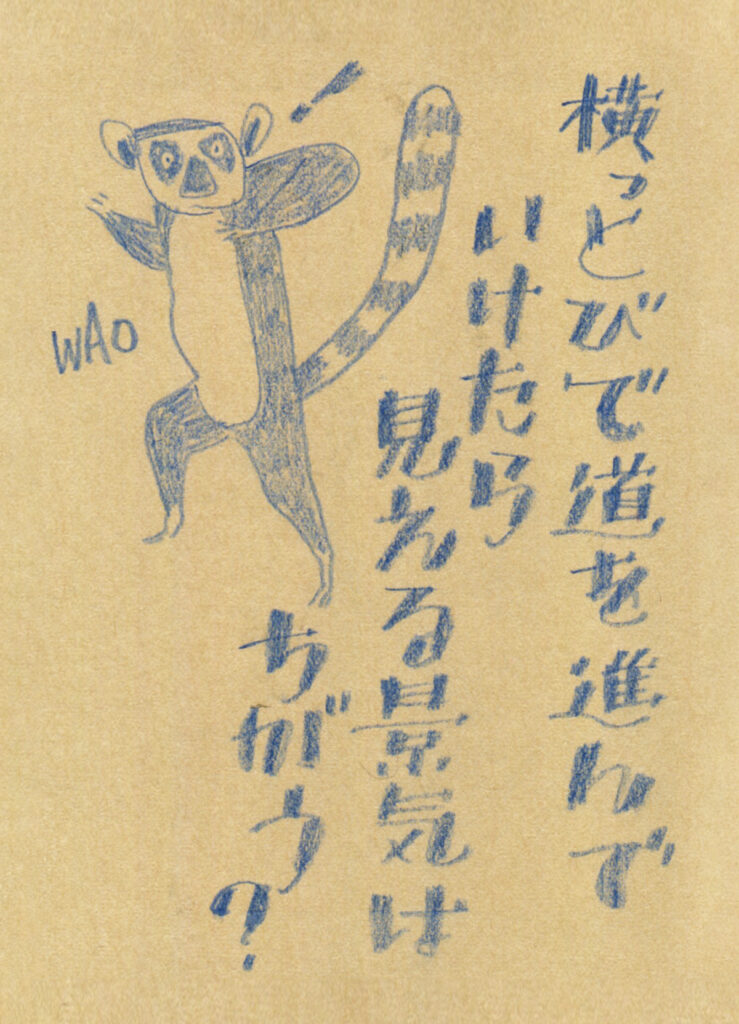
Theme: The physical temperature of words, visualizing unseen thoughts, and the synergy of typography and illustration.
Artist: Kazue Shima (Visual Story Artist)